I was planning to go to Molus Island to see seals. I spent a lot of time searching internet for reasonably priced underwater drones. Radio waves do not spread very much in the water, I was looking for a wired drone. When the answer was clear, I was looking for a way to immerse GoPro Hero with attached video cable, using a reasonably priced interface. When the answer to this question became clear, I looked for wires and transitions to make some changes to the waterproof case myself and watch the underwater video at the end of the wire. So by chance I came across a brilliant solution on Youtube. You need to take an antenna cable, put one end behind the GoPro as a WiFI antenna and the other behind the mobile phone.
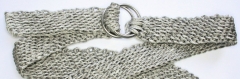
I had a suitable six-meter cable left over from the marine radio antenna I bought from Tehnoturg - a good flexible and high-quality piece of cable at all ends. I removed the outer shield by about half the WiFI wavelength (63 mm) at both ends. I left the inner insulation cover so that the radio wave could reach the end of the cable without stirring the water. I sealed the open end of the cable with self-shrinking and thermosetting with glue. I did so with both ends of the cable. I made a small stainless steel clip to hold the cable behind the camera. The antenna is held in place by a transparent little tube that was a ballpoint pen in its previous life. A quick test in a domestic rainwater barrel confirmed that it works.
The short filming nearby the Molus Islands went smoothly. Although no seals were left in the film, the communication between the cell phone and the camera worked perfectly.
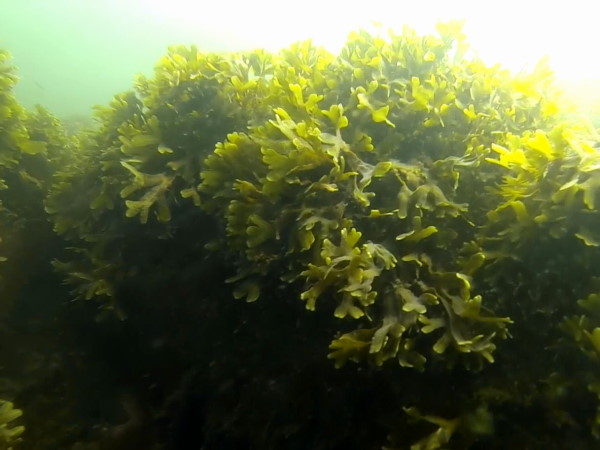
Now it is possible to study the condition of the well, look under the boat into the water or instead study the ice hole, what is really going on down there. Of course, it's a long way from the drone, but the GoPro picture is good and where the drone still needs to be sent. You can ride the boat to the right place on the water. Of course, those who want to can attach the camera to a long fishing rod or surf pole, for example, and so the camera can be placed in the right place underwater.
If, of course, in-depth observations are planned, this solution is not enough. Experience shared on the Internet suggests that about 10-15 m still works, depending on the quality of the cable and the implementation. For a longer cable, a slightly better antenna solution is already needed, and one commercial product suggests that a 100 m cable is also possible, although when going deep, a bomb-proof camera housing is needed.